




Innovation Without Disruption: What a Thickness Sensor Reveals About Sociotechnical Systems in Industrial Inspection
Innovation is not always about creating something entirely new. Sometimes, it’s about reinventing what already exists.
By Carlos Augusto Costa, Mechanical Engineer at Petrobras

I recently attended an event where, in a lecture on industrial inspection, I encountered a simple solution that made me reflect on something deeper.
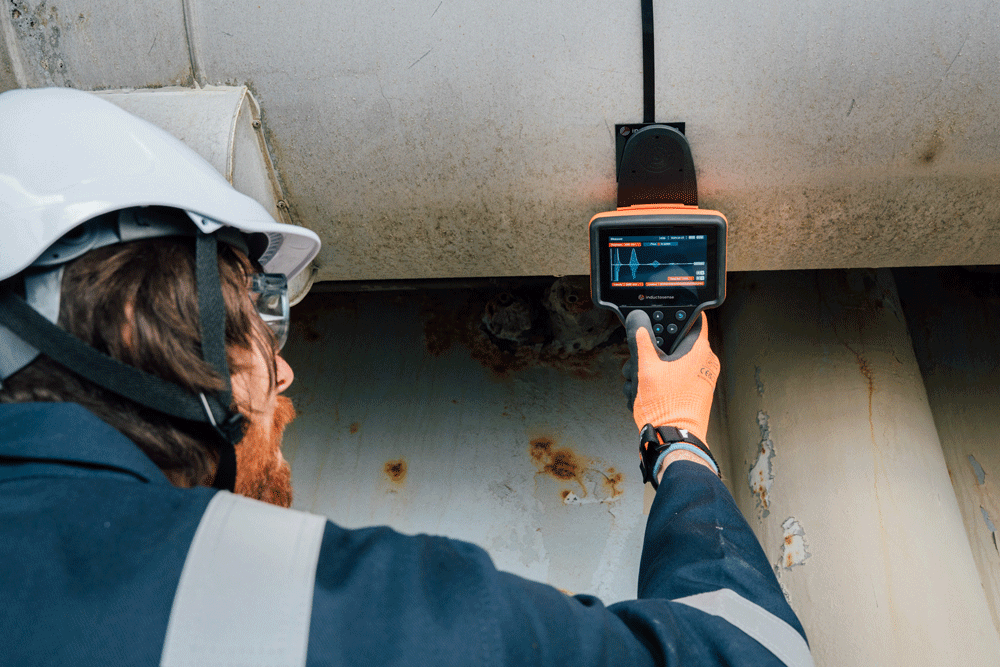
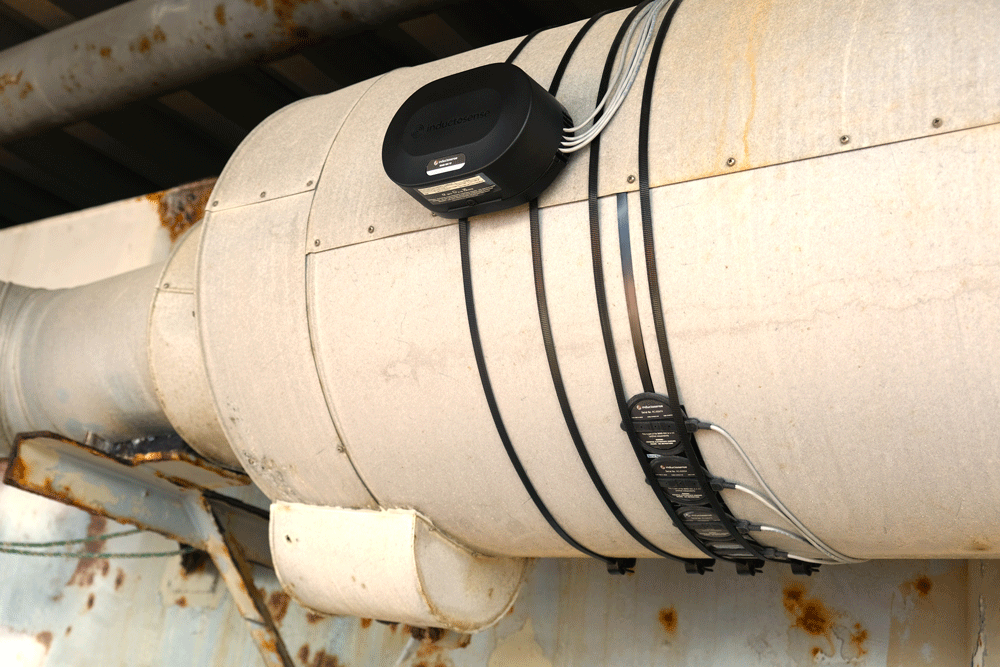
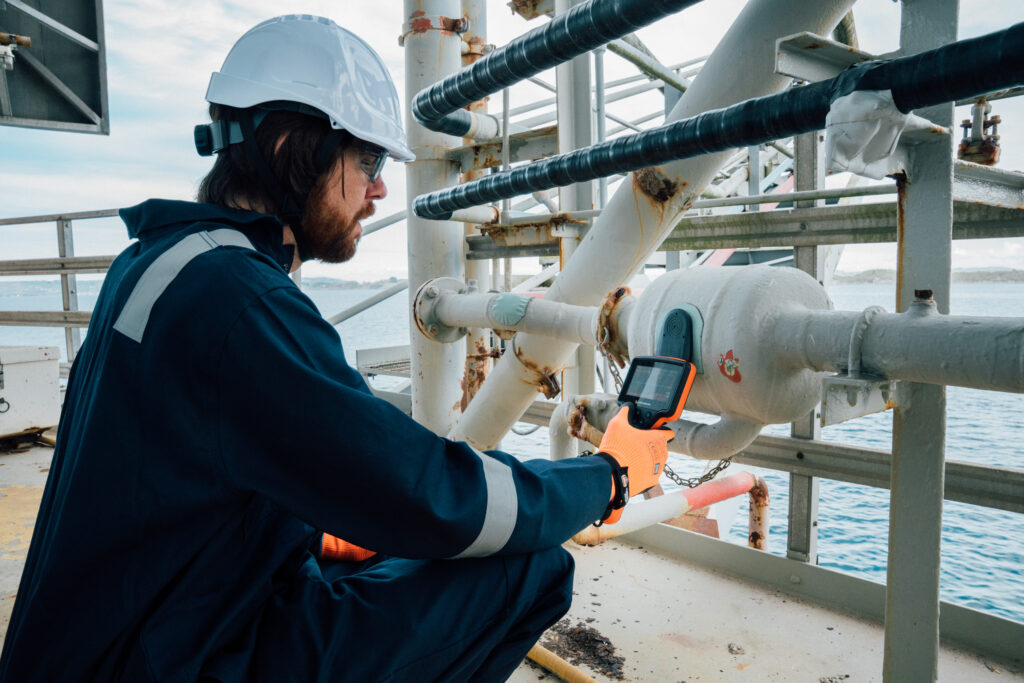
What caught my attention was a thickness measurement device. But it wasn’t the traditional ultrasonic gauge I knew from my inspection days; this case involved a sensor (adhesive) that stays fixed on the asset, eliminating direct access to the inspection point.
A brief search revealed it was the technology by Inductosense, a UK company, a spin-out from the University of Bristol, which developed the WAND system - a battery-free ultrasonic monitoring solution with fixed sensors and remote reading via magnetic induction.
At first glance, it seemed like just an incremental improvement. But understanding how it works, I saw something more interesting.
What used to happen inside the measuring device was deconstructed. The transducer, previously internal, was moved to the adhesive. The device now only acts as an excitation source via magnetic induction, with no direct contact with the transducer.
- The physical principle is the same (piezoelectric effect).
- Nothing changed in physics.
- Everything changed in how it’s used.
The reading becomes remote, continuous, and repeatable. A small change in system architecture. A huge impact on the value generated.
Technology Does Not Operate Alone
In industry, it’s common to attribute gains solely to technology. But real results emerge from the interaction between:
- Equipment
- Processes
- People
- Operational context
This is a sociotechnical system: inseparable technical and social elements.
In integrity inspection, the challenge was never just measuring. The issue was more complex and involved conflicting dimensions: How to access the point, enable frequency and repeatability, and reduce exposure to risk?
Traditional technology solved measurement but left gaps in the system as a whole.
When Innovation Lies in Architecture, Not in the Component
The observed sensor does not introduce a new physical phenomenon. It changes the system’s architecture.
The central question shifts from: How to measure better? To: How to make measurement feasible, frequent, and safe in a real-world context?
By fixing the transducer and allowing remote reading, critical constraints are eliminated:
- Dangerous or difficult access
- Operator variability
- Low inspection frequency
- Dependence on operational windows
The result is a more robust system, not just a more efficient measurement.
The Role of Humans Doesn’t Disappear - It Changes
It’s not about automating and reducing the human factor. In practice, the opposite happens.
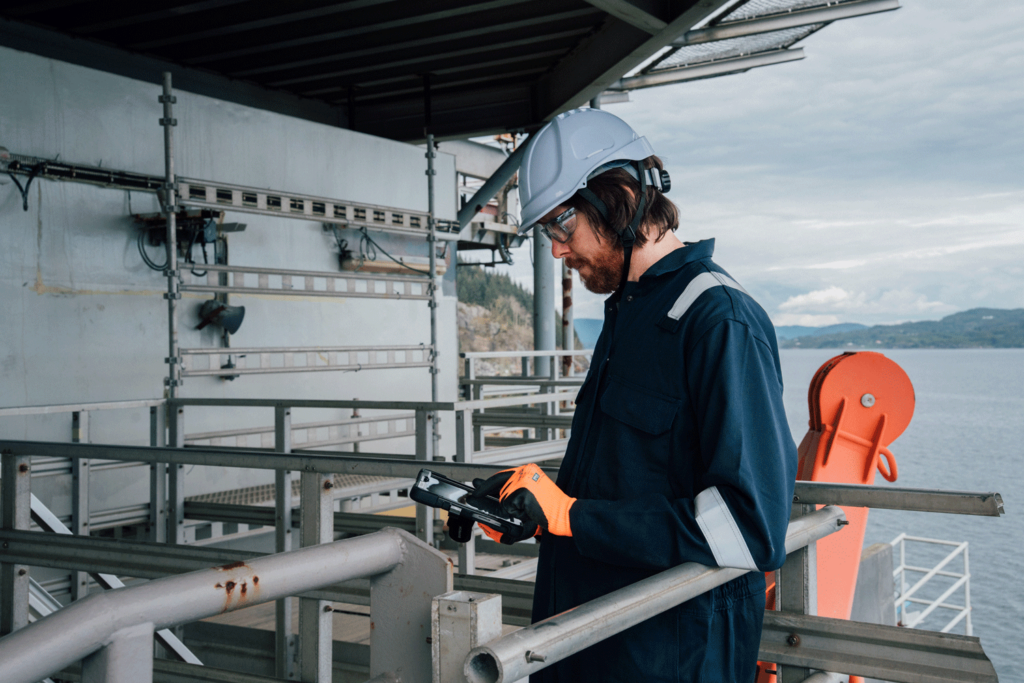
The inspector moves from being predominantly operational (accessing, positioning, measuring) to:
- Properly installing the sensor
- Interpreting data
- Identifying trends
- Making decisions
- Integrating information into the operational context
Humans shift from execution to system management.
Reducing Variability, Increasing Resilience
Traditional inspection systems carry inevitable variabilities:
- Different inspectors
- Different access conditions
- Different measurement points
- Different transducer couplings
With the fixed sensor:
- Constant measurement point
- Stable coupling
- Invariant geometry
- Standardised data collection
This reduces data dispersion and increases analysis reliability. It allows for a shift from one-off campaigns to continuous monitoring, bringing inspection closer to mature predictive maintenance practices.
The Invisible Gain: Work Redesign
Perhaps the greatest impact is in work redesign.
When access is no longer a constraint:
- Scaffolding and temporary structures are eliminated
- Downtime is reduced
- Exposure to risks decreases
- Monitoring capacity expands
These gains don’t appear in the equipment’s technical specifications but are determined by overall system performance.
This is where the sociotechnical approach becomes essential: value is not in the artefact alone but in the transformation of the system in which it operates.
A Broader Lesson for Engineering
The case illustrates something beyond industrial inspection:
The most effective innovations often do not arise from creating new technologies but from intelligently reconfiguring mature technologies within real systems.
This requires a different kind of competence:
- Deeply understanding the process
- Identifying real operational constraints
- Seeing the interaction between people and technology
- Redesigning workflows
In other words: thinking like a systems engineer, not just a technical specialist.
Conclusion
Inductosense’s solution does not represent a technological revolution in the traditional sense. Yet, its potential impact is significant. Why?
Because it operates where systems actually succeed or fail: at the interface between technology, operation, and human behaviour.
By transforming a point measurement into a continuous, accessible capability, it shows how small changes in the architecture of a sociotechnical system can generate large gains in safety, efficiency, and reliability.
In the end, the lesson is simple - and powerful:
Innovation isn’t necessarily about discovering something new. Often, it’s about looking at what already exists and asking: What if we used this differently?