Digital Wall Thickness Monitoring: Digitalisation and Asset Integrity
The challenges and solutions to manual internal corrosion monitoring.
Digitalising asset integrity management is becoming increasingly prioritised across sectors such as oil and gas, nuclear, mining, and chemical. As organisations focus on improving safety, efficiency, and asset reliability, digitalisation is becoming central to how wall thickness inspection data is captured and applied within asset integrity management frameworks.
However, many inspection programmes continue to rely on traditional Non-Destructive Testing (NDT), including Manual Ultrasonic Testing (MUT). While widely adopted, these methods can limit data repeatability and reliability, reduce visibility of asset condition, and restrict the effectiveness of digital internal corrosion monitoring strategies.
Without repeatable, high-frequency measurements, operators have limited ability to identify corrosion and erosion trends early, optimise maintenance planning, or support informed integrity decisions. Accurate wall thickness data remains fundamental to Risk-Based Inspection (RBI), predictive maintenance, and safe operation. As a result, organisations are adopting technologies that enable automated data collection and integration into digital workflows.

Challenges in Digital Internal Corrosion Monitoring
While digital platforms are increasingly implemented within asset integrity management, inspection data collection methods often remain manual, limiting repeatability and scalability. Common limitations include:
- Manual inspection processes
MUT relies on highly trained personnel to collect readings manually. This increases operational cost, reduces accessibility, and introduces human error in measurement data.
- Infrequent data collection
Periodic inspection cycles create gaps in available data, limiting visibility of corrosion and erosion trends between inspection events.
- Lack of repeatability
Measurements are not always taken from identical locations, reducing confidence in long-term corrosion rate analysis.
- Disconnected data workflows
Inspection results are frequently stored in separate systems, limiting integration with broader asset integrity management platforms.
- Limited asset condition visibility
Without consistent datasets, it is difficult to maintain a continuous understanding of asset degradation.
The WAND Solution
The Inductosense WAND Solution is a cost-effective, scalable system that uses permanently installed sensors to provide accurate and repeatable ultrasonic wall thickness monitoring. By combining fixed sensing locations, automated data collection, and integrated software, the system supports the digitalisation of inspection workflows and improves data reliability for internal corrosion and erosion monitoring.
- WAND Thickness Monitoring Sensors (WAND TM Sensors)
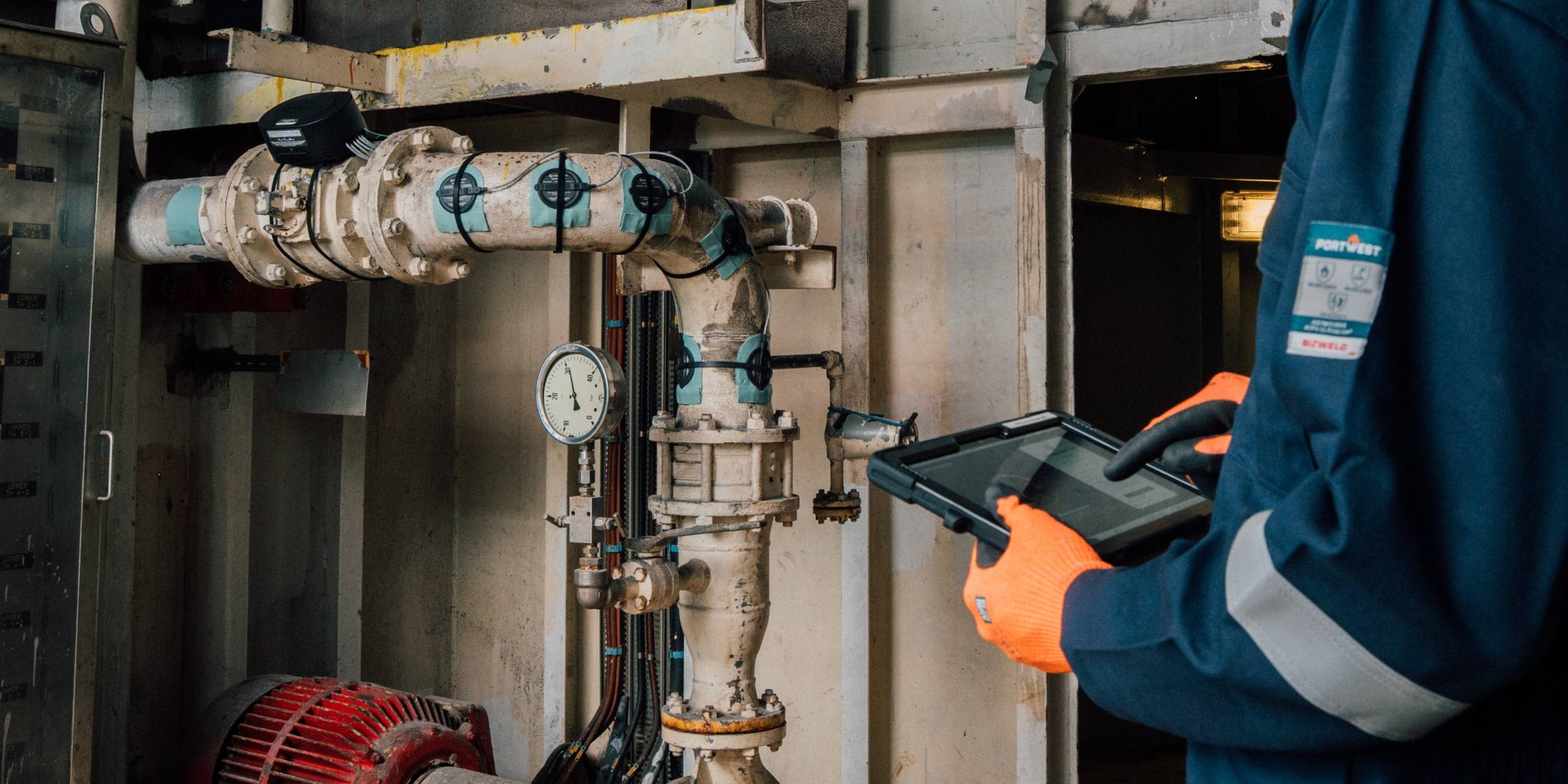
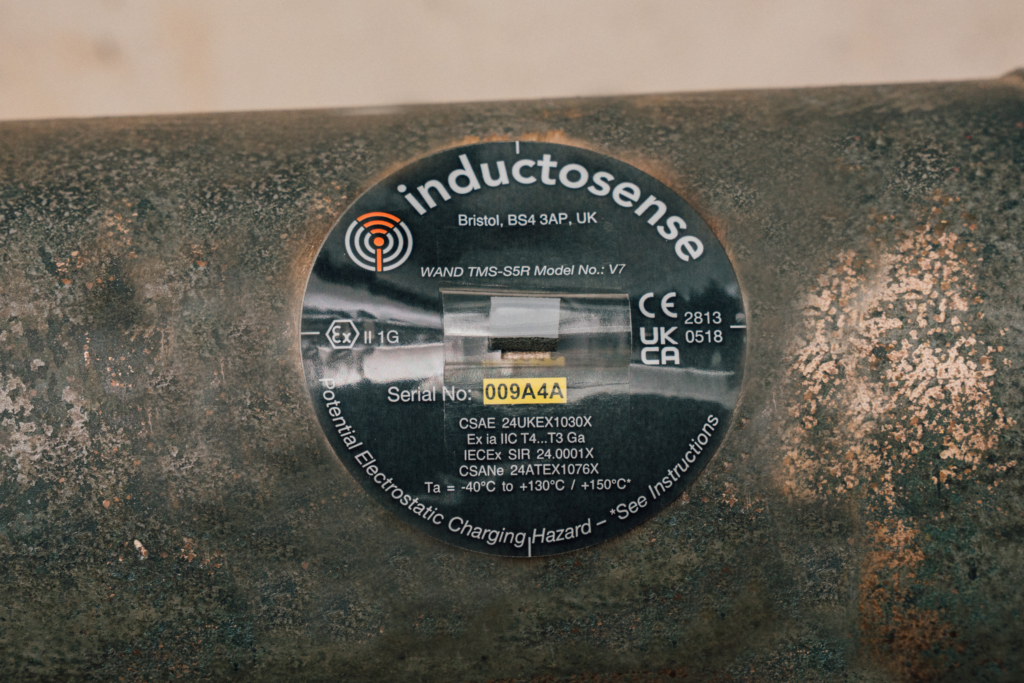
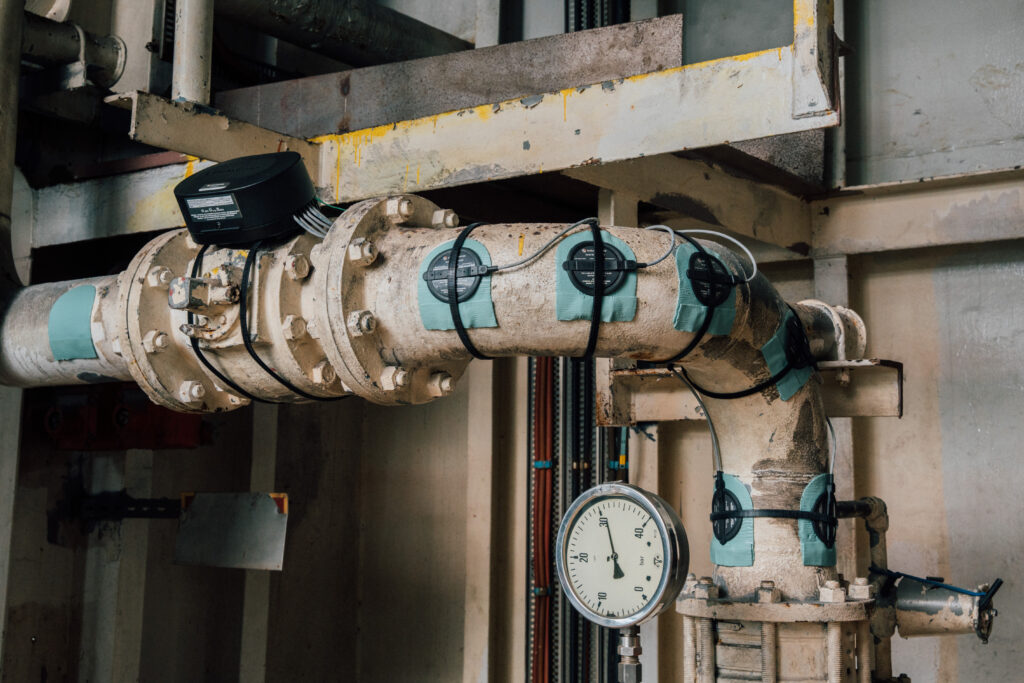
WAND TM Sensors are thin, battery-free, permanently installed ultrasonic sensors designed for long-term corrosion and erosion monitoring. These sensors provide accurate and repeatable wall thickness measurements from fixed locations and can be installed under insulation or coatings.
Each sensor includes RFID tagging, ensuring secure and consistent data identification. Operating wirelessly without batteries, WAND TM Sensors removes variability associated with manual inspection methods and enables fully digital internal corrosion monitoring.
- WAND Remote Data Collectors (WAND-RDC)
WAND-RDC enable automated data acquisition from installed sensors without manual intervention.
The device activates sensors at scheduled intervals and transmits wall thickness data wirelessly via long-range Bluetooth 5.0 (up to 200 metres / 656 feet line of sight). This enables consistent, repeatable data collection and reduces reliance on manual inspection campaigns.
- WAND Online
WAND Online enables remote access to wall thickness data via cloud connectivity, delivering inspection results directly into the iDART platform.
Operating via 4G connectivity, the system removes the need for local infrastructure and supports scalable deployment across distributed or remote assets.
- iDART
The Data Analysis and Reporting Toolkit (iDART) is used to manage, analyse, and visualise wall thickness data.
It enables corrosion and erosion trends to be assessed over time, supports anomaly detection, and allows integration with third-party asset integrity management systems.
Application: Monitoring Sand Erosion in Flowlines
Sand remains a significant challenge in offshore oil and gas operations, leading to accelerated erosion in flowlines. Traditional inspection methods often require specialist deployment, introduce operational cost, and provide limited data consistency.
Challenges
Challenges
- Limited visibility of erosion rates between inspection intervals.
- High cost and complexity of offshore ultrasonic inspection campaigns.
- Restricted access to erosion-prone locations such as elbows and bends.
- Variability in manual probe positioning affecting measurement repeatability.
- Insufficient data to support long-term wall loss trending.

Implementation
Implementation
- 169 WAND TM Sensors deployed across erosion-prone flowline locations.
- Installation focused on elbows, tie-ins, and high-turbulence sections.
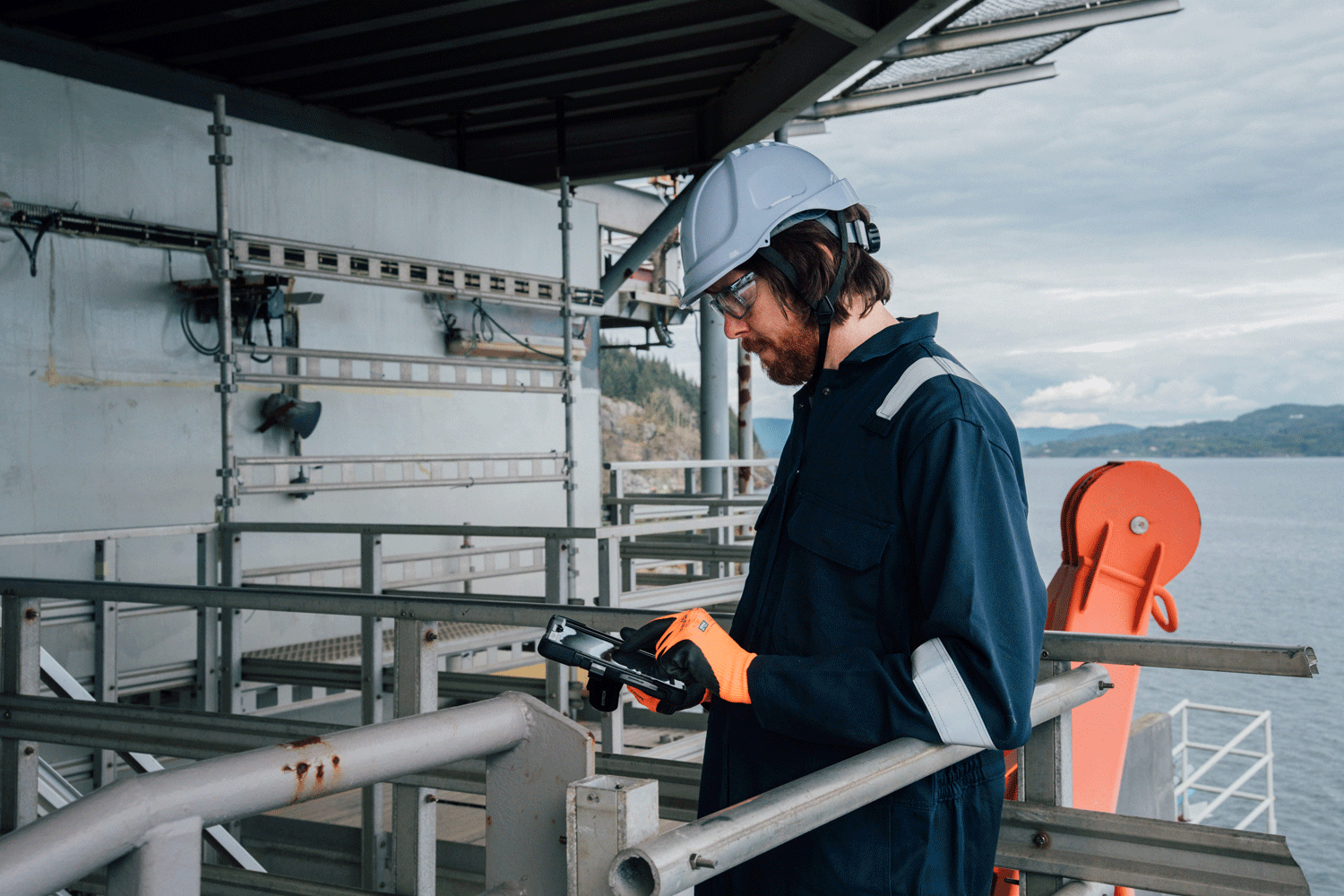
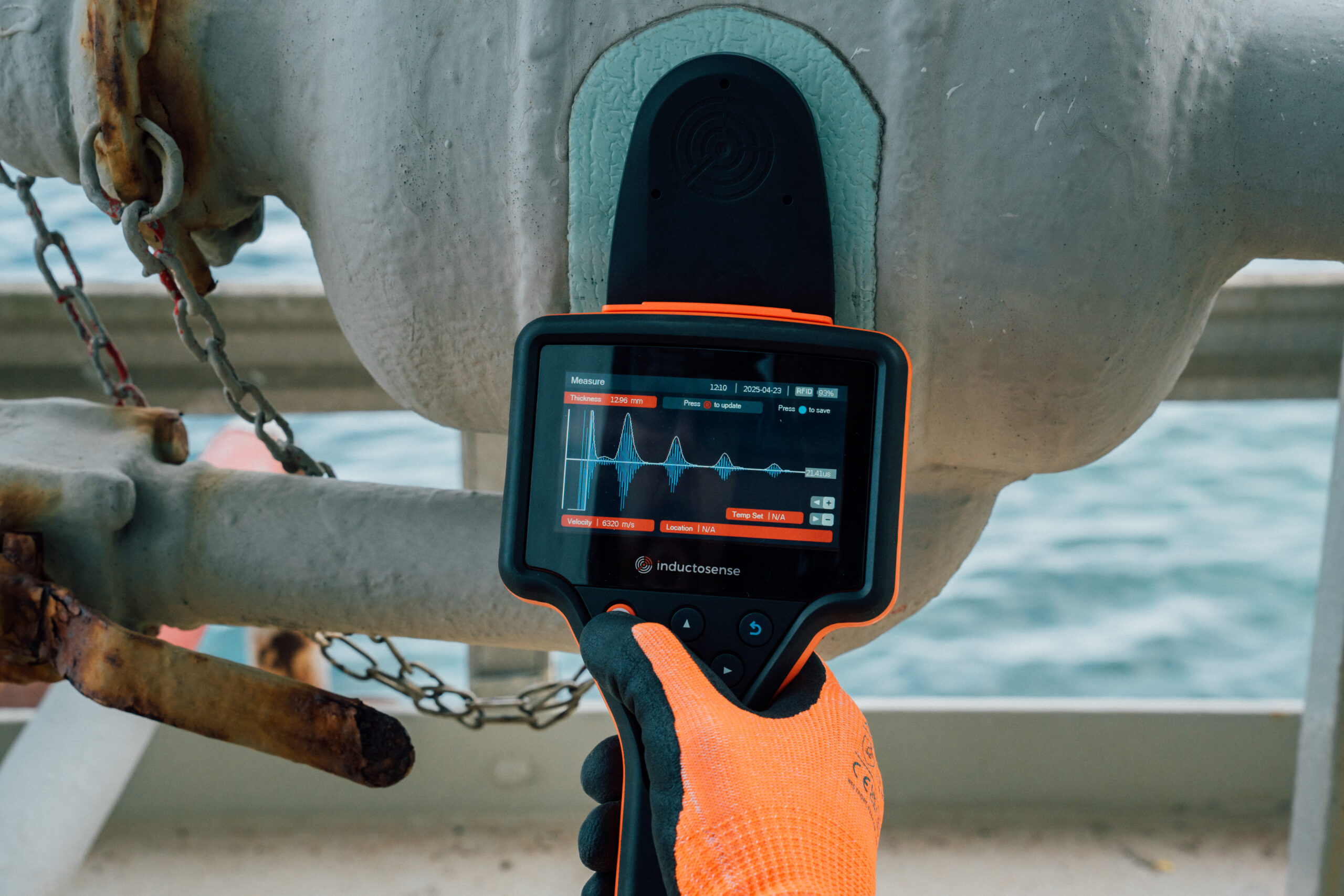
- WAND Handheld Data Collector (WAND-HDC) used for repeatable on-demand readings.
- Baseline ultrasonic measurements used for initial reference values.
- Routine data collection performed by offshore personnel without specialist NDT support.
Results
Results
- Consistent, repeatable wall thickness data from fixed sensor locations.
- Clear identification of erosion trends across high-risk areas.
- Strong correlation between WAND measurements and baseline ultrasonic data.
- Reduced reliance on dedicated inspection campaigns.
- Improved inspection efficiency and reduced operational cost.
- Increased confidence in long-term integrity management and erosion tracking.
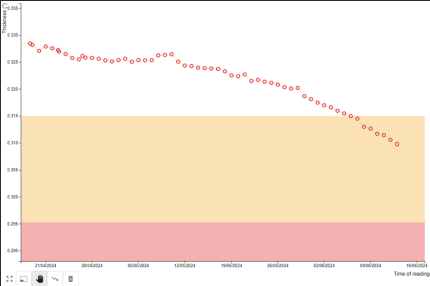
Inductosense’s WAND Solution enables fully digitalised inspection programmes by combining fixed sensors, automated data collection, and integrated analysis software. This improves the consistency and reliability of inspection data, supports RBI processes, and enables a more structured, data-driven approach to asset integrity management.
Enquire today
Speak with a member of the team today to learn how WAND can upgrade your manual UT inspection to fully digitalised wall thickness monitoring.
Enter your details below
"*" indicates required fields